Spectra S1 Plus Review: Why It Is Still the Default Recommendation (2026)
A Spectra S1 Plus review covering the rechargeable battery, closed system, adjustable two-phase cycling, the flange sizing issue owners hit, and how it compares to the S2 Plus and Medela Pump in Style Pro+.
The Spectra S1 Plus is the pump most people should buy first, because it does the thing every other format compromises on: it moves milk reliably, comfortably and on a battery. Skip it only if you genuinely need to pump invisibly under work clothes, in which case a wearable such as the Elvie Stride Plus is solving a different problem.
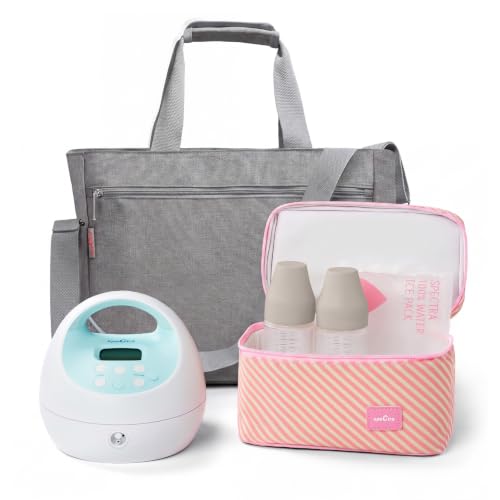
Spectra Baby S1 Plus Electric Breast Milk Pump with Tote, Bottles & Cooler
Rechargeable double electric pump with adjustable suction, two-phase cycling that mimics natural feeding rhythm, a backflow protector closed system, and a bottle compartment built into the body.
Check price on AmazonWearable pumps get the attention because they solve a visible problem. The Spectra solves an invisible one: it is the pump people keep using at month eight. The two-phase cycling is adjustable in a way that lets you find a rhythm that works for your body rather than accepting a preset, and the closed system means you are not cleaning a motor you cannot reach.
Spectra S1 Plus at a glance
| Spec | Spectra S1 Plus |
|---|---|
| Format | Standard double electric, rechargeable |
| Power | Internal rechargeable battery plus mains adapter |
| Cycling | Two-phase, massage and expression, adjustable |
| System | Closed, with backflow protector between milk and motor |
| Use | Single or double pumping |
| Extras | Built-in compartment for a Spectra bottle |
| Budget | Under $500 (with tote, bottles and cooler) |
Specifications above come from Spectra's published product information. Confirm current pricing before buying.
Where it falls short
The honest weakness has nothing to do with the motor. It is that the pump ships with one flange size and a very large number of people need a different one, and nothing in the box tells you that. Published owner reviews are full of people who assumed the pump was underperforming when the flange was wrong. This is the single most consequential thing to get right, and it is a fitting question for a lactation consultant rather than a shopping decision.
The second weakness is that it is not discreet. It is a box with tubes. You can carry it, you can run it on battery, but you are not pumping through a meeting with this. That is the entire reason the wearable category exists.
Third, parts. Spectra parts are widely available and inexpensive, but valves and backflow protectors are consumables and suction quietly declines as they age. A pump that seems to have lost its power at four months usually needs $15 of silicone, not a replacement.
What owners consistently report
Drawing on the pattern across published owner reviews rather than any hands-on use of our own: comfort is the recurring theme. People describe being able to dial the cycle speed and suction independently until it stops feeling like a machine, and that is the reason the Spectra keeps being recommended in feeding groups. Reliability over months of daily use comes up repeatedly, as does the quietness relative to older plug-in pumps.
The recurring complaints are the tubing to keep track of, the size of the unit in a work bag, and the fact that replacement parts are an ongoing purchase most people did not budget for.
Who it suits
- Anyone pumping as their main way of feeding, or building and protecting supply.
- Parents who want one pump that will still be working at a year.
- People who need to pump away from an outlet, which is the whole reason to pick the S1 over the S2 Plus.
- Anyone who has found wearables uncomfortable or disappointing.
Who should skip it
- Parents whose blocker is privacy at work, who need a wearable such as the Willow Go.
- Anyone who will only ever pump beside a socket, who can save money with the plug-in S2 Plus.
Planning around daycare
If you are pumping because a childcare start date is coming, decide the schedule before the gear. Our childcare cost calculator shows what different day counts actually cost, and breastfeeding and pumping around daycare covers how many bottles to send, how centres want milk labelled, and their storage rules. If you are still choosing a provider, the waitlist tracker keeps the applications straight.
Alternatives worth comparing

Spectra Baby S2 Plus Premier Electric Breast Pump with Tote
Better value if you never pump away from an outlet. The same natural nursing technology and two-phase cycling, no internal battery, and a tote included.
Check price on Amazon
Medela Pump in Style Pro+ Double Electric Breast Pump
Better at cleanup, with only four pump parts to wash and wide-angle shields, plus a rechargeable battery in a lighter body.
Check price on Amazon
Elvie Stride Plus, Hospital-Grade App-Controlled Hands-Free Breast Pump
Better at discretion. In-bra cups you can wear under work clothes, at the cost of the output and comfort advantages a standard pump holds.
Check price on AmazonThe head-to-heads are Spectra S1 vs S2 and Spectra S1 vs Medela Pump in Style, and the wider field is in best breast pumps for going back to work.
Buying notes
Check insurance first, because standard double electric pumps like this one are the category most plans cover outright. Order spare valves and backflow protectors with the pump. And have your flange size checked by a lactation consultant or your clinician rather than assuming the size in the box is yours, because it is the difference between this pump being excellent and being a disappointment.
This review draws on Spectra's published product information and the consensus of published owner reviews. We have not tested this pump ourselves. Nothing here is medical or lactation advice; take pain, supply and fit questions to a lactation consultant or your clinician. As an Amazon Associate we earn from qualifying purchases, at no extra cost to you.
Frequently Asked Questions
What is the difference between the Spectra S1 and S2?+
The functional difference is the battery. The S1 Plus has a rechargeable internal battery so it can be used anywhere, and the S2 Plus must be plugged in. The pumping mechanism, suction range and cycling are otherwise the same, which is why the S2 costs a little less. If you will ever pump in a car, on a floor away from an outlet, or in a room where the only socket is across the room, buy the S1. Our Spectra S1 vs S2 comparison covers it in full.
Is the Spectra S1 a closed system pump?+
Yes. Spectra publishes that a backflow protector creates a physical barrier between the milk and the pump motor. That is what closed system means in practice: milk and moisture should not reach the motor or the tubing. It matters for hygiene and it is the main reason a Spectra can be used with a new set of parts by a second person, though manufacturers still class these pumps as single user devices.
Does the Spectra S1 hurt, and what suction should I use?+
Pumping should not hurt. Pain almost always means the flange is the wrong size or the suction is set higher than it needs to be. Higher suction does not mean more milk; the cycling pattern and a correct fit matter more. If pumping hurts, stop, drop the suction, and have a lactation consultant or your clinician check your flange size and technique before you carry on.
How many hours does the Spectra S1 battery last?+
Spectra describes the S1 Plus as portable and rechargeable and owners commonly report several sessions from a charge, though battery capacity fades over the life of any rechargeable device. Treat it as a pump that frees you from hunting for an outlet rather than one you can leave uncharged for a week. Keep the mains adapter in your bag.
Spectra S1 or Medela Pump in Style Pro+?+
Both are standard double electric pumps with rechargeable batteries. Spectra is usually chosen for its gentler, highly adjustable cycling and its long track record; Medela's Pump in Style Pro+ is usually chosen for its four-part cleaning setup and its wide-angle shields. Our Spectra S1 vs Medela Pump in Style comparison lays the two out together.
Written by
ChildCarePath Team
Our team is dedicated to helping families find quality child care options through well-researched guides and resources.
Related Guides
Comotomo vs Dr. Brown's: Which Bottle for a Breastfed Baby at Daycare? (2026)
Comotomo's soft silicone body suits babies switching between breast and bottle; Dr. Brown's vent system targets gas and reflux. Compare cleaning, parts and daycare practicality.
Elvie Double Breast Pump Review: Who the Premium Wearable Actually Suits (2026)
An honest Elvie Double review for parents heading back to work: what the cordless in-bra design solves, where output and clogging complaints come from, and cheaper wearables that do most of the job.
Elvie Stride Plus Review: The Wearable That Kept the Motor Outside (2026)
An Elvie Stride Plus review for parents returning to work: suction to -300 mmHg, in-bra cups with an external motor, the tubing and condensation complaints, and cheaper and stronger alternatives.
Medela Pump in Style Pro+ Review: Four Parts and a Battery (2026)
A Medela Pump in Style Pro+ review covering the 11.8% more milk claim, wide-angle shields, 16 suction levels, four-part cleaning, and how it stacks up against the Spectra S1 Plus.
Momcozy S12 Pro Review: The Wearable Pump to Try First (2026)
A Momcozy S12 Pro review: double-sealed flange, three modes, nine levels, 6 oz capacity and around half the price of an Elvie or Willow. Where it wins and where the cheap wearable shows.
Spectra S1 vs Medela Pump In Style: Which Back-to-Work Pump? (2026)
Spectra S1 and the Medela Pump In Style Pro are the two pumps most parents cross-shop before returning to work. Compare noise, portability, parts cost and insurance availability.