Elvie Stride Plus Review: The Wearable That Kept the Motor Outside (2026)
An Elvie Stride Plus review for parents returning to work: suction to -300 mmHg, in-bra cups with an external motor, the tubing and condensation complaints, and cheaper and stronger alternatives.
The Elvie Stride Plus is the wearable to buy when you want serious suction and a slim profile under clothes, and you are willing to accept a small motor clipped to your waistband to get both. Skip it if a wire of any kind defeats the purpose for you, in which case the fully cordless Elvie Double is the pump you actually want, at roughly twice the price.

Elvie Stride Plus, Hospital-Grade App-Controlled Hands-Free Breast Pump
In-bra cups weighing under 5 oz each with an external motor, suction up to -300 mmHg, stimulation and expression modes with 10 intensity settings each, app control and a 3-in-1 cool bag.
Check price on AmazonThe Stride Plus exists because of a specific engineering trade. A motor small enough to live in a bra is a small motor. Move it outside, and you can make it stronger while making the part against your body thinner. Elvie's published figure of up to -300 mmHg in a single cup setup is the payoff, and the short tube running to a clip-on motor is the price.
Elvie Stride Plus at a glance
| Spec | Elvie Stride Plus |
|---|---|
| Format | In-bra cups, external motor on a short tube |
| Suction | Up to -300 mmHg in a single cup setup |
| Modes | Stimulation and expression, 10 intensity settings each |
| Cup weight | Under 5 oz per cup |
| Shields included | Two 24 mm; other sizes sold separately |
| App | Remote control of suction and pumping history |
| In the box | 3-in-1 carry bag with wet bag, cool bag and ice pack |
| Budget | Under $250 |
Specifications above come from Elvie's published product information. Prices move, so confirm before buying.
Where it falls short
The honest weakness is that this is a hybrid, and hybrids annoy the purists on both sides. If you came to wearables because you wanted nothing attached to you, the motor is a wire you have to route under clothing and remember to unclip before standing up. If you came from a plug-in pump, the cups still hold less than a bottle and still need emptying more often than a standard pump does.
The second weakness is one that published owner reviews return to constantly: the shields. Twenty-four millimetres is the size in the box and it is not the right size for a large share of people. When output disappoints on this pump, fit is the first thing to check and it is frequently the answer. Buying a second flange size is effectively part of the true cost.
Third, condensation in the tubing is a normal consequence of the design and unsettles people who have not been told to expect it. Milk in the tubing is a different matter and means something is wrong with assembly or a worn seal.
What owners consistently report
Summarising the consensus of published owner reviews rather than any use of our own: suction strength is the thing people praise most, often in comparison to cheaper wearables they tried first. The slim cups get repeated credit for being genuinely discreet under work clothes. The cool bag included in the box comes up more often than you would expect, because it removes a separate purchase for anyone commuting.
The consistent complaints are shield sizing, the wire, and small parts wearing out. As with every wearable, the seals and valves are consumables and the pump quietly gets worse before it fails.
Who it suits
- Parents who want strong suction in a wearable and will accept a clip-on motor.
- Anyone who needs the slimmest possible cup profile under fitted work clothes.
- Commuters who want the cool bag and wet bag already included.
- People stepping up from a budget wearable that did not have enough pull.
Who should skip it
- Anyone who wants nothing attached at all, who should look at the Elvie Double.
- Exclusive pumpers and anyone building supply, where a plug-in Spectra S1 Plus or Medela Pump in Style Pro+ is the more dependable tool.
- Anyone unsure whether a wearable suits them, who should try the Momcozy S12 Pro first at half the money.
Fitting it into the return-to-work maths
If you are buying a pump because childcare starts soon, the pump is the small number. Run your household figures through the childcare cost calculator and the work vs stay home guide before you commit to a schedule, and read breastfeeding and pumping around daycare for how centres want milk labelled and stored.
Alternatives worth comparing

Elvie Double, Wearable Breast Pump with App
Better at invisibility. Motor, cup and battery all inside the bra with nothing clipped to you, and notably quiet, for roughly twice the price.
Check price on Amazon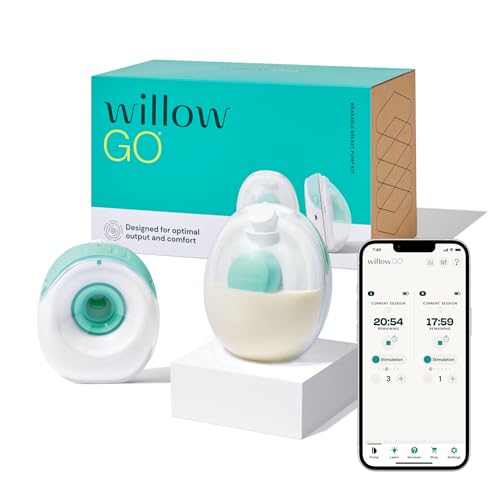
Willow Go Wearable Breast Pump, Hands Free Double Electric
Better at self-containment and capacity. Everything sits in the bra, containers hold 5 oz per side, and both 24 mm and 21 mm flanges are included.
Check price on Amazon
Momcozy S12 Pro Wearable Electric Breast Pump, Hands-Free
Better at cost of entry. Three modes, nine levels and a 6 oz capacity for around half the price, and the sensible way to find out whether wearables work for you.
Check price on AmazonFor the wider field see best breast pumps for going back to work, and for the direct head-to-head read Willow Go vs Elvie Stride.
Buying notes
Check insurance coverage first. Budget for a second flange size, because the included 24 mm shields are a starting point rather than a fit. Keep spare seals in your bag. And take sizing and any pain to a lactation consultant or clinician rather than working it out from reviews, including this one.
This review draws on Elvie's published product information and the consensus of published owner reviews. We have not tested this pump ourselves. Nothing here is medical or lactation advice. As an Amazon Associate we earn from qualifying purchases, at no extra cost to you.
Frequently Asked Questions
Is the Elvie Stride Plus hospital grade?+
Elvie publishes suction up to -300 mmHg in a single cup setup, with separate stimulation and expression modes and 10 intensity settings in each. That is strong for a wearable. The phrase hospital grade is a marketing term rather than a regulated category, so treat it as a claim about suction strength rather than a promise of hospital rental pump performance.
What is the difference between the Elvie Stride and the Elvie Double?+
The Elvie Double puts the motor inside the bra, so nothing at all hangs off you, and costs under $500. The Elvie Stride Plus keeps the cups in the bra and moves the motor outside on a short tube, which is why it costs roughly half. If total invisibility matters most, the Double wins. If suction strength per dollar matters most, the Stride Plus is the better buy.
Does the Elvie Stride come with the right flange size?+
It ships with two 24 mm shields, and other sizes are sold separately. Twenty-four millimetres is a default, not a fit. Flange sizing depends on your anatomy, changes over the months you pump, and the wrong size causes pain and lower output at the same time. Have a lactation consultant or your clinician check your fit while you are pumping rather than guessing from a chart.
Why is there condensation or milk in the tubing?+
Some condensation in the tubing is normal on a pump that moves air between a motor and a cup. Actual milk in the tubing is not, and it means the seal or the backflow protection is not doing its job, usually because a silicone part is misassembled or worn out. Replace the seals, check assembly against the manual, and stop using a set that keeps letting milk through.
Elvie Stride Plus vs Willow Go: which should I buy?+
They cost about the same. The Stride Plus is slimmer in the bra because the motor is outside, and is usually described as the stronger suction of the two. The Willow Go is fully self-contained with nothing clipped to you and holds five ounces per side. Our Willow Go vs Elvie Stride comparison sets the two out side by side.
Written by
ChildCarePath Team
Our team is dedicated to helping families find quality child care options through well-researched guides and resources.
Related Guides
Comotomo vs Dr. Brown's: Which Bottle for a Breastfed Baby at Daycare? (2026)
Comotomo's soft silicone body suits babies switching between breast and bottle; Dr. Brown's vent system targets gas and reflux. Compare cleaning, parts and daycare practicality.
Elvie Double Breast Pump Review: Who the Premium Wearable Actually Suits (2026)
An honest Elvie Double review for parents heading back to work: what the cordless in-bra design solves, where output and clogging complaints come from, and cheaper wearables that do most of the job.
Medela Pump in Style Pro+ Review: Four Parts and a Battery (2026)
A Medela Pump in Style Pro+ review covering the 11.8% more milk claim, wide-angle shields, 16 suction levels, four-part cleaning, and how it stacks up against the Spectra S1 Plus.
Momcozy S12 Pro Review: The Wearable Pump to Try First (2026)
A Momcozy S12 Pro review: double-sealed flange, three modes, nine levels, 6 oz capacity and around half the price of an Elvie or Willow. Where it wins and where the cheap wearable shows.
Spectra S1 Plus Review: Why It Is Still the Default Recommendation (2026)
A Spectra S1 Plus review covering the rechargeable battery, closed system, adjustable two-phase cycling, the flange sizing issue owners hit, and how it compares to the S2 Plus and Medela Pump in Style Pro+.
Spectra S1 vs Medela Pump In Style: Which Back-to-Work Pump? (2026)
Spectra S1 and the Medela Pump In Style Pro are the two pumps most parents cross-shop before returning to work. Compare noise, portability, parts cost and insurance availability.