Momcozy S12 Pro Review: The Wearable Pump to Try First (2026)
A Momcozy S12 Pro review: double-sealed flange, three modes, nine levels, 6 oz capacity and around half the price of an Elvie or Willow. Where it wins and where the cheap wearable shows.
The Momcozy S12 Pro is the wearable pump to buy first, because it answers the question that actually matters: does an in-bra pump work for your body and your day? Skip it if you already know wearables suit you and you need maximum suction, where the Elvie Stride Plus is stronger, or if you are exclusively pumping, where a standard Spectra S1 Plus is the safer tool.

Momcozy S12 Pro Wearable Electric Breast Pump, Hands-Free, 24 mm
Fully in-bra wearable with a double-sealed flange, three modes covering stimulation, expression and mixed, nine adjustable levels, a 6 oz capacity and a small display showing time and battery.
Check price on AmazonPremium wearables cost between $225 and $400, which is a lot of money to spend finding out that you do not get on with pumping through a shirt. The S12 Pro sits at roughly half of that while keeping the parts of the format that matter: nothing hanging off you, a real capacity, a display you can read without your phone, and modes that follow the stimulation-then-expression pattern every decent pump uses.
Momcozy S12 Pro at a glance
| Spec | Momcozy S12 Pro |
|---|---|
| Format | Fully wearable, in-bra |
| Flange | Double-sealed, 24 mm on this listing |
| Modes | Stimulation, expression and mixed |
| Levels | 9 adjustable |
| Capacity | 6 oz |
| Battery | Roughly 7 to 8 sessions per 130-minute charge |
| Display | Pumping time and battery level, one-click pause |
| Budget | Under $250 |
Specifications above come from Momcozy's published product information. Prices move, so confirm before buying.
Where it falls short
The honest weakness is suction ceiling and consistency. This is a cheaper motor in a cheaper housing, and published owner reviews reflect that: the S12 Pro is frequently described as comfortable and adequate rather than powerful. People who move up to a premium wearable or a standard pump usually report a difference. If your sessions already feel like they are not emptying you, a stronger pump is a reasonable next step and a lactation consultant is a better first step.
The second weakness is durability of the small parts, which is a wearable problem generally but bites sooner at this price. Diaphragms and duckbill valves are consumables. Suction fades before it fails, so it is easy to conclude the pump was never any good when it actually needs $10 of silicone.
Third, the 24 mm default. It is the standard size in the box on almost every pump and it fits a minority of people well. Buying the pump without budgeting for the correct flange size is the most common way people end up disappointed.
What owners consistently report
Summarising the pattern in published owner reviews rather than any use of our own: comfort is the surprise. The double-sealed flange comes up repeatedly as softer against the body than people expected at the price, and the mixed mode gets specific praise. The 6 oz capacity means most sessions finish without stopping, which is the practical reason people keep using it.
The recurring criticisms are suction that seems weaker than a premium wearable, occasional leaking when the assembly is not exact, and parts wearing out sooner than people would like. Owners also frequently note that a firm nursing bra matters more than any setting on the pump.
Who it suits
- Parents trying a wearable for the first time who do not want to gamble on a premium pump.
- Anyone who pumps once or twice a day around direct feeding.
- People who need a second pump for the car, the commute or the office.
- Buyers who value comfort over raw suction.
Who should skip it
- Exclusive pumpers and anyone working to build supply.
- People who have already found wearables too weak, who should look at the Elvie Stride Plus or Willow Go.
- Anyone who wants the smallest possible profile, which is the Elvie Double.
The number that actually matters
The pump is not the expensive part of returning to work. Childcare is. Put your real figures into the childcare cost calculator before you optimise a $100 decision, and read breastfeeding and pumping around daycare for how centres handle labelled milk and how many bottles to send.
Alternatives worth comparing
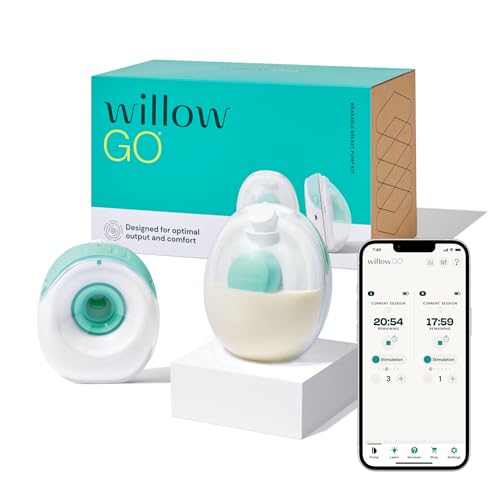
Willow Go Wearable Breast Pump, Hands Free Double Electric
Better at suction and build, with 9 levels of hospital-grade suction strength, reusable 5 oz containers and two flange sizes in the box.
Check price on Amazon
Elvie Stride Plus, Hospital-Grade App-Controlled Hands-Free Breast Pump
Better at pulling. Suction up to -300 mmHg with the motor outside the bra, which is the compromise that makes the strength possible.
Check price on Amazon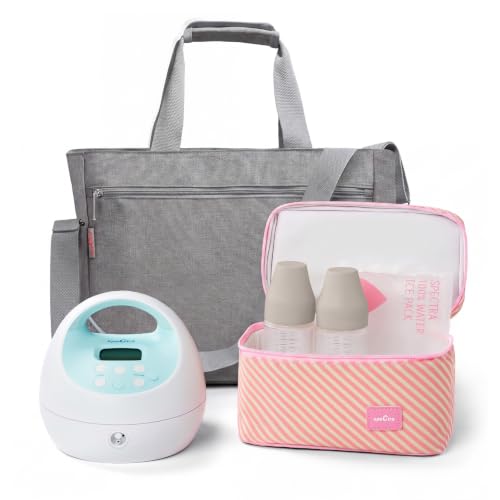
Spectra Baby S1 Plus Electric Breast Milk Pump with Tote, Bottles & Cooler
Better at milk volume. A rechargeable standard double electric pump, and the usual recommendation when supply rather than mobility is the problem.
Check price on AmazonSee Willow Go vs Elvie Stride if you are stepping up, and best breast pumps for going back to work for the wider field.
Buying notes
Check insurance first; some plans now cover wearables and most cover a standard double electric pump outright. Order spare diaphragms and duckbill valves with the pump. Wear a firm, supportive nursing bra rather than a soft one. And take flange sizing to a lactation consultant or your clinician, because it is the single change most likely to improve both comfort and output.
This review draws on Momcozy's published product information and the consensus of published owner reviews. We have not tested this pump ourselves. Nothing here is medical or lactation advice. As an Amazon Associate we earn from qualifying purchases, at no extra cost to you.
Frequently Asked Questions
Is the Momcozy S12 Pro as good as an Elvie or Willow?+
It is not as strong or as refined, and it does not need to be for many people. It covers the same core idea, an in-bra pump you can wear under clothes, at around half the price. Published owner reviews are consistent that the comfort of the double-sealed flange is genuinely good and that suction sits below the premium wearables. If you are unsure whether the wearable format works for your body at all, this is the sensible way to find out without spending under $500.
How long does the Momcozy S12 Pro battery last?+
Momcozy publishes support for roughly 7 to 8 pumping sessions on a 130-minute charge. As with any rechargeable device, expect that number to shrink over the months you own it. Charge it overnight rather than relying on the last bar in the middle of a work day.
What flange size does the Momcozy S12 Pro come with?+
This listing is the 24 mm version. Twenty-four millimetres is a default rather than a fit, and the wrong size causes pain, nipple damage and reduced output at the same time. Have a lactation consultant or your clinician measure and check your fit while you pump before you decide the pump is the problem.
Can I use the Momcozy S12 Pro as my only pump?+
Many people do, particularly alongside direct feeding. It is a less reliable choice if you are exclusively pumping or working to build supply, because wearables as a category generally move less milk per session than a standard double electric pump such as the Spectra S1 Plus. That is a decision worth taking to a lactation consultant rather than to a review.
Why has my Momcozy stopped suctioning properly?+
Almost always a worn or misassembled silicone part. The diaphragm, duckbill valve and seals are consumables on every wearable pump and they degrade with heat and repeated washing. Replace them on a schedule rather than waiting for a failure, and check the assembly against the manual before assuming the motor has died.
Written by
ChildCarePath Team
Our team is dedicated to helping families find quality child care options through well-researched guides and resources.
Related Guides
Comotomo vs Dr. Brown's: Which Bottle for a Breastfed Baby at Daycare? (2026)
Comotomo's soft silicone body suits babies switching between breast and bottle; Dr. Brown's vent system targets gas and reflux. Compare cleaning, parts and daycare practicality.
Elvie Double Breast Pump Review: Who the Premium Wearable Actually Suits (2026)
An honest Elvie Double review for parents heading back to work: what the cordless in-bra design solves, where output and clogging complaints come from, and cheaper wearables that do most of the job.
Elvie Stride Plus Review: The Wearable That Kept the Motor Outside (2026)
An Elvie Stride Plus review for parents returning to work: suction to -300 mmHg, in-bra cups with an external motor, the tubing and condensation complaints, and cheaper and stronger alternatives.
Medela Pump in Style Pro+ Review: Four Parts and a Battery (2026)
A Medela Pump in Style Pro+ review covering the 11.8% more milk claim, wide-angle shields, 16 suction levels, four-part cleaning, and how it stacks up against the Spectra S1 Plus.
Spectra S1 Plus Review: Why It Is Still the Default Recommendation (2026)
A Spectra S1 Plus review covering the rechargeable battery, closed system, adjustable two-phase cycling, the flange sizing issue owners hit, and how it compares to the S2 Plus and Medela Pump in Style Pro+.
Spectra S1 vs Medela Pump In Style: Which Back-to-Work Pump? (2026)
Spectra S1 and the Medela Pump In Style Pro are the two pumps most parents cross-shop before returning to work. Compare noise, portability, parts cost and insurance availability.