Elvie Double Breast Pump Review: Who the Premium Wearable Actually Suits (2026)
An honest Elvie Double review for parents heading back to work: what the cordless in-bra design solves, where output and clogging complaints come from, and cheaper wearables that do most of the job.
The Elvie Double is the wearable breast pump to buy when total freedom of movement is the point and the budget is not the constraint. Skip it if your priority is milk volume per session, if you are still building supply, or if you would be equally happy with a wearable that has a small motor clipped to your waistband, because two of those cost around half as much.

Elvie Double, Wearable Breast Pump with App
Fully cordless in-bra pump with no tubes and no external motor, app control, four personalised settings and automatic switching between stimulation and expression.
Check price on AmazonEverything that is good and everything that is frustrating about this pump comes from the same design decision. Elvie put the motor, the collection cup and the battery inside a single unit that sits in your bra. Nothing hangs, nothing dangles, and nobody in the room needs to know. That is a genuinely different experience from a pump with a wire running to a box, and for parents whose real problem is that they never manage to sit still for twenty minutes, it is the difference between pumping and not pumping.
Elvie Double at a glance
| Spec | Elvie Double |
|---|---|
| Format | Fully wearable, in-bra, no tubes or external motor |
| Control | Elvie app, plus on-device buttons |
| Modes | Stimulation and expression, with automatic switching |
| Settings | Four personalised settings saved in the app |
| Tracking | Live milk volume and pumping history in the app |
| Shields included | Two sizes; further sizes sold separately |
| Budget | Under $500 |
Specifications above come from Elvie's published product information. Treat the price as approximate, since Amazon pricing moves.
Where it falls short
The honest weakness is output, and it is a category problem rather than a defect. Wearable pumps put a smaller motor and a smaller collection space into a package that has to fit inside a bra, and the consensus across published owner reviews is that a wearable typically yields less per session than a standard double electric pump such as the Spectra S1 Plus. Parents who own both overwhelmingly describe the wearable as the convenience pump and the plug-in as the volume pump. If you are still establishing supply, or you are exclusively pumping, that ordering matters a great deal and is worth raising with a lactation consultant before you spend on one.
The second recurring complaint is small parts. Seals, valves and spouts are consumables. They warp with heat, they stop sealing, and when they stop sealing the pump leaks into your shirt or quietly stops pulling. This is fixable and cheap, but it is a maintenance habit you have to build, and it is the single most common reason an Elvie that used to work stops working.
Third, capacity. Because the cup lives in your bra, it holds a limited volume and it is orientation sensitive. Leaning forward with a full cup is how most reported spills happen.
What owners consistently report
Summarising the pattern across published owner reviews rather than any use of our own: the praise is nearly always about life, not milk. People describe pumping while driving, while presenting, while pushing a stroller, and they describe that as the reason they kept breastfeeding after returning to work. The quietness is called out repeatedly and appears to be real.
The criticism is nearly always about volume, seals and cost of ownership. A recurring theme is that the pump works well until a silicone part ages, and that the fix is not obvious to a tired parent at 6am. Reviews also frequently mention that fit matters more on a wearable than on a standard pump, because the cup has to sit correctly against the body with a bra holding it there.
Who it suits
- Parents returning to work who need to pump during meetings, commutes or shift changes.
- Anyone whose barrier to pumping is time and privacy rather than supply.
- Parents of a second or later child who cannot sit down for twenty minutes.
- People who already have a plug-in pump and want a wearable for the away sessions.
Who should skip it
- Anyone exclusively pumping or working to build supply, where a hospital-strength plug-in pump is usually the better tool.
- Budget-conscious buyers, since the Elvie Stride Plus and Willow Go sell for around half as much.
- Anyone whose insurance covers a standard double electric pump in full, which is worth checking first.
The cost conversation nobody has first
Pumping is usually the cheapest part of returning to work, and the pump is a rounding error against childcare. Before you agonise over the price gap between the two, run your actual numbers through our childcare cost calculator and read work vs stay home. Parents routinely discover the pump decision is trivial next to the care decision, and occasionally discover the reverse.
If you are pumping specifically because your baby is starting daycare, our guide to breastfeeding and pumping around daycare covers labelling milk, centre storage rules and how many bottles to send.
Alternatives worth comparing

Elvie Stride Plus, Hospital-Grade App-Controlled Hands-Free Breast Pump
Better at suction strength for the money. The cups are in-bra but the motor is separate and clips to you, which is the compromise that halves the price.
Check price on Amazon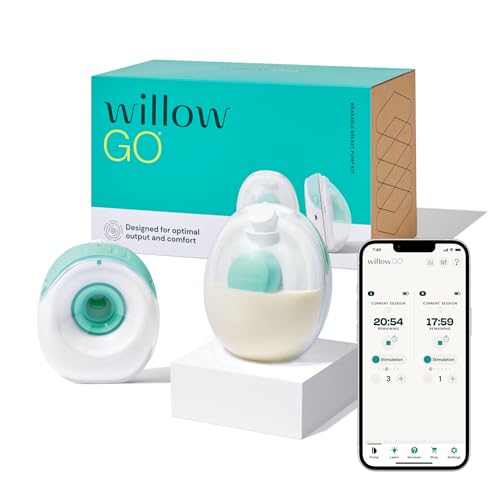
Willow Go Wearable Breast Pump, Hands Free Double Electric
Better at container size. Five ounce reusable containers and two flange sizes in the box, at a noticeably lower price than the Elvie Double.
Check price on Amazon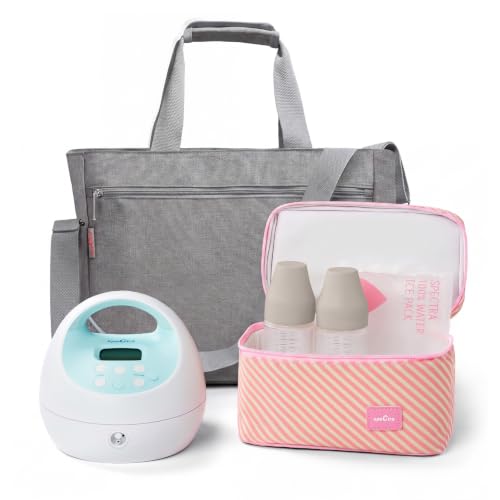
Spectra Baby S1 Plus Electric Breast Milk Pump with Tote, Bottles & Cooler
Better at milk volume. A rechargeable standard double electric pump with a closed system, and the one most often recommended when supply rather than convenience is the problem.
Check price on AmazonFor a fuller field, see our roundup of the best breast pumps for going back to work, and if you are choosing between the two mid-priced wearables, read Willow Go vs Elvie Stride.
Buying notes
Check your insurance first, since many plans cover a standard double electric pump outright and will not cover a wearable. Order a spare set of seals and valves with the pump rather than after the first failure. And treat flange sizing as a clinical fitting rather than a purchase decision: a lactation consultant or your clinician should check the fit while you pump, because the wrong size costs you comfort and output at the same time.
This review draws on Elvie's published product information and the consensus of published owner reviews. We have not tested this pump ourselves, and we say so rather than implying otherwise. Nothing here is medical or lactation advice; for supply, pain or feeding concerns, speak to a lactation consultant or your clinician. As an Amazon Associate we earn from qualifying purchases, at no extra cost to you.
Frequently Asked Questions
Is the Elvie Double worth the price?+
It is worth it if being completely cordless is the thing standing between you and pumping at all. There is no tubing, no external motor and no wire down your shirt, so you can pump on a call, in a car park or while carrying a toddler. If you can tolerate a small motor clipped to your waistband, the Elvie Stride Plus and Willow Go do most of the same job for roughly half the money, and a Spectra S1 Plus generally produces more milk per session for less again.
Does the Elvie Double pump as much milk as a Spectra?+
The consensus of published owner reviews is no, not usually. Wearable pumps as a category trade some output for freedom of movement, and Elvie owners who also own a standard double electric pump frequently report the wearable is their day-out and back-at-work pump rather than their supply-building pump. If output is the priority, ask a lactation consultant before you spend, and consider keeping a plug-in pump for the sessions that matter most.
What flange size do I need for the Elvie?+
That is a fitting question, not a shopping question. Flange sizing depends on your anatomy and it changes over time, and the wrong size causes pain, nipple damage and lower output all at once. The Elvie ships with two shield sizes and sells others separately, but the right way to choose is to have a lactation consultant or your clinician measure and check your fit while pumping.
Why does my Elvie leak or lose suction?+
Leaking and lost suction are the two most common complaints in published owner reviews, and they usually trace to assembly and to the small parts wearing out. The seal, valve and spout need to be seated exactly right, and the silicone parts are consumables that degrade with heat and repeated washing. If it worked and then stopped, replace the seals before you replace the pump, and check that you are not over-filling past the stated capacity while leaning forward.
Elvie Double vs Willow Go: which should I buy?+
The Elvie Double is fully in-bra with nothing attached to it. The Willow Go is also in-bra but is designed around larger reusable containers and app control at a lower price. Most parents choosing between them are really choosing between paying a premium for the smallest possible profile and paying less for slightly more bulk. Our Willow Go vs Elvie Stride comparison walks through the wearable trade-offs in detail.
Written by
ChildCarePath Team
Our team is dedicated to helping families find quality child care options through well-researched guides and resources.
Related Guides
Comotomo vs Dr. Brown's: Which Bottle for a Breastfed Baby at Daycare? (2026)
Comotomo's soft silicone body suits babies switching between breast and bottle; Dr. Brown's vent system targets gas and reflux. Compare cleaning, parts and daycare practicality.
Elvie Stride Plus Review: The Wearable That Kept the Motor Outside (2026)
An Elvie Stride Plus review for parents returning to work: suction to -300 mmHg, in-bra cups with an external motor, the tubing and condensation complaints, and cheaper and stronger alternatives.
Medela Pump in Style Pro+ Review: Four Parts and a Battery (2026)
A Medela Pump in Style Pro+ review covering the 11.8% more milk claim, wide-angle shields, 16 suction levels, four-part cleaning, and how it stacks up against the Spectra S1 Plus.
Momcozy S12 Pro Review: The Wearable Pump to Try First (2026)
A Momcozy S12 Pro review: double-sealed flange, three modes, nine levels, 6 oz capacity and around half the price of an Elvie or Willow. Where it wins and where the cheap wearable shows.
Spectra S1 Plus Review: Why It Is Still the Default Recommendation (2026)
A Spectra S1 Plus review covering the rechargeable battery, closed system, adjustable two-phase cycling, the flange sizing issue owners hit, and how it compares to the S2 Plus and Medela Pump in Style Pro+.
Spectra S1 vs Medela Pump In Style: Which Back-to-Work Pump? (2026)
Spectra S1 and the Medela Pump In Style Pro are the two pumps most parents cross-shop before returning to work. Compare noise, portability, parts cost and insurance availability.