BabyBjörn Smart Potty vs Toilet Trainer Seat: Which for Potty Training? (2026)
A floor potty lets a toddler get on and off alone; a toilet seat insert skips the second transition. Compare independence, cleaning and what most daycares are set up for.
Start most toddlers on the Smart Potty and move to the Toilet Trainer once they are steady. A floor potty is low enough that a two-year-old can get on and off without help, and that independence is most of what makes early training work. The toilet seat insert avoids a second transition later and is the tidier option to clean, but it needs a step stool and a child who is not nervous about height.

BabyBjörn Smart Potty, Deep Green/White
Low, stable, one-piece bowl that lifts out. Small enough to move between rooms, which matters in the first weeks.
Check price on Amazon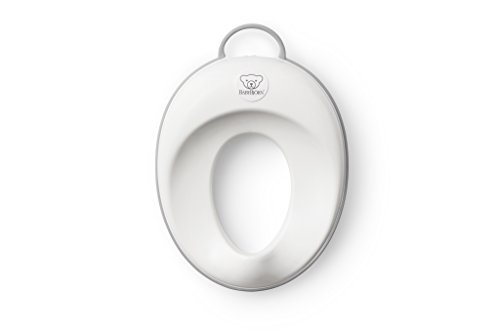
BabyBjörn Toilet Trainer, White/Gray
Sits on a standard toilet with adjustable side grips. Nothing to empty, and no second transition to the real toilet later.
Check price on AmazonDaycare potty training runs on a schedule and on consistency between home and the classroom, so the most useful thing you can do before buying anything is ask the center what they use and how they run it. Most centers have child-height toilets or floor potties already, and most will ask that home and center use the same language and the same routine.
A note on timing that is worth more than any product choice: readiness is about signals, not age. Staying dry for longer stretches, telling you before or after, showing interest, being able to pull pants up and down. Pushing before those appear is the most reliable way to make training take longer.
Smart Potty vs Toilet Trainer at a glance
| BabyBjörn Smart Potty | BabyBjörn Toilet Trainer | |
|---|---|---|
| Child gets on alone | Yes | Needs a step stool |
| Emptying | Removable inner bowl | Nothing to empty |
| Portability | Move it to any room | Fits one toilet at a time |
| Second transition | Yes, to the toilet later | No |
| Fear of height | None | Common early on |
| Budget | Under $50 | Under $50 |
Choose the BabyBjörn Smart Potty if…
You are starting, or your child is under about two and a half. A floor potty removes every barrier: no climbing, no height, no waiting for an adult, and it can sit in the room where your child actually is during those first weeks. The trade-offs are that somebody empties it every time and that you will do this again in a year when you move to the toilet.
Check the BabyBjörn Smart Potty on Amazon
Choose the BabyBjörn Toilet Trainer if…
Your child is already confident, or your daycare uses standard toilets and you want home to match. Nothing to empty is a bigger quality-of-life difference than it sounds, and skipping the later transition to the real toilet removes a stage that some children find harder than the first one. Buy a sturdy step stool at the same time, because a child dangling from a toilet seat with no foot support will not relax, and that alone stalls plenty of training.
Check the BabyBjörn Toilet Trainer on Amazon
Coordinate with the center
Ask your center for their potty training policy in writing. Many require a child to be in underwear rather than pull-ups to be considered training, many ask for several changes of clothes daily during the process, and nearly all ask that families use the same words at home. Regression during a stressful period is common and is not a reason to restart from the beginning; if you are worried about it, or about constipation or withholding, that is a pediatrician question.
Related guides
Comparison based on published manufacturer specifications and the general consensus of owner reports. We have not tested these products side by side. Confirm current prices, sizes and specifications before buying. As an Amazon Associate we earn from qualifying purchases, at no extra cost to you.
Frequently Asked Questions
Is a floor potty or a toilet seat better for training?+
Neither is better in general, and many families use both. Floor potties suit younger toddlers because they allow independence with no climbing. Toilet inserts suit children who are already steady and skip a later transition. If your daycare uses one style, matching it at home is usually worth more than the difference between the products.
When are most children ready to start potty training?+
Commonly between eighteen months and three years, but readiness signals matter more than age: staying dry for longer stretches, showing interest, communicating the need, and being able to manage clothing. Starting before those signs generally lengthens the process. Ask your pediatrician if you are unsure whether your child is ready.
Do daycares require children to be potty trained?+
Policies vary widely. Many preschool programs require it for the three-year-old room, while daycare centers usually train alongside families. Ask for the written policy at enrolment, because the deadline it implies is often the real reason families start when they do.
How do I clean a potty properly?+
Empty into the toilet, rinse, then clean with soap and water and a disinfectant appropriate for surfaces a child touches. Wash the child's hands and your own every time. The BabyBjörn inner bowl lifts out, which is the feature that makes this routine tolerable enough to do consistently.
Written by
ChildCarePath Team
Our team is dedicated to helping families find quality child care options through well-researched guides and resources.
Related Guides
Bentgo Chill vs OmieBox: Cold Lunch or Hot Lunch for Daycare? (2026)
Bentgo Chill keeps a cold lunch cold with removable ice packs; OmieBox adds an insulated thermos well for hot food. Compare capacity, leak resistance and daycare practicality.
Brother P-touch CUBE Plus Review: Labelling Everything for Daycare (2026)
A Brother P-touch CUBE Plus PT-P710BT review for parents: Bluetooth label printing up to 24 mm, laminated TZe tapes that survive the dishwasher, running tape cost, and cheaper label options.
Hatch Baby Sound Machine Review: Routine Builder, Subscription Attached (2026)
A Hatch Baby sound machine and night light review: app-controlled routines, sleep guides, the Hatch+ subscription after three months, safe volume for infants, and simpler alternatives.
Hatch Rest vs Yogasleep Dohm: Which Sound Machine for a Nursery? (2026)
Hatch Rest adds a night light, app control and routines; the Dohm is a mechanical fan that never loops. Compare sound quality, features and safe volume for a nursery.
Munchkin Miracle 360 vs NUK Learner Cup: Which First Cup? (2026)
The Miracle 360 drinks like an open cup with no spout; the NUK Learner keeps a soft spout. Compare spill resistance, dental guidance and which one daycare will accept.
Skip Hop Forma vs Ruvalino: Which Diaper Bag Backpack? (2026)
Skip Hop's Forma organises daycare drop-off in defined pockets; the Ruvalino is a bigger, cheaper bag with more raw space. Compare capacity, organisation and durability.