Babysitter vs Nanny: Understanding the Real Differences in 2026
What's the difference between a babysitter and a nanny? Responsibilities, pay, schedules, legal requirements, and which is right for your family's childcare needs.
You need someone to care for your child in your home, but should you hire a babysitter or a nanny? Many parents use these terms interchangeably, but they describe different roles with different expectations, pay structures, and legal implications.
Understanding the distinction helps you hire the right person for your needs—and set up the arrangement correctly.

Quick Comparison
| Aspect | Babysitter | Nanny |
|---|---|---|
| Schedule | Occasional, as-needed | Regular, consistent schedule |
| Hours | Few hours at a time | Part-time to full-time (15-50+/week) |
| Commitment | Short-term, flexible | Long-term employment |
| Relationship | Transactional | Professional employment |
| Duties | Basic childcare | Comprehensive child-related |
| Pay structure | Hourly, cash often | Hourly/salary, on the books |
| Tax status | Often informal | Household employee (W-2) |
| Age | Often teens/college | Usually adults |
As an Amazon Associate, we earn from qualifying purchases.
Recommended Baby Care Products
- Dr. Browns Natural Flow Bottles - Anti-colic bottles trusted by parents and caregivers
- Muslin Swaddle Blankets - Soft, breathable blankets for comfort at daycare
- White Noise Sound Machine - Helps babies sleep better during nap time
What Is a Babysitter?
Definition
A babysitter is: Someone who cares for your children occasionally, usually for a few hours at a time, on an as-needed basis.
Typical characteristics:
- Works irregularly (date nights, occasional needs)
- Short shifts (2-6 hours typically)
- No long-term commitment expected
- Often a teenager or college student
- May babysit for multiple families
- Basic supervision and care
- Paid per job or hourly
When You Need a Babysitter
Common situations:
- Date nights
- Occasional errands
- Social events
- Backup when regular care falls through
- School holidays or closures
- Weekend afternoons
You need a babysitter if:
- Care is occasional (less than weekly)
- Hours are few at a time
- Needs are unpredictable
- You don't need consistent care
- No long-term relationship needed
Finding Babysitters
Where to find:
- Neighborhood teens
- Care.com, Sittercity, UrbanSitter
- College job boards
- Friend and neighbor recommendations
- Local parenting groups
What to look for:
- Experience with your child's age
- References from other families
- CPR/first aid certification (preferred)
- Reliable transportation
- Availability matching your needs
Paying Babysitters
Typical rates (2026):
- Teens: $12-18/hour
- Adults with experience: $18-25/hour
- Multiple children: Add $2-5/hour
- Varies significantly by location
Payment practices:
- Often paid in cash
- Paid at end of each job
- No formal employment relationship
- Tax implications minimal (usually)
Tax note: If you pay a babysitter less than $2,700/year (2024 threshold, check current year), you typically don't need to treat them as a household employee. But if you use one person regularly exceeding that threshold, the nanny tax rules may apply.

What Is a Nanny?
Definition
A nanny is: A professional childcare provider who works for your family on a regular, consistent schedule, often as a household employee.
Typical characteristics:
- Works regular weekly schedule
- Part-time (15-35 hours) or full-time (35-50+ hours)
- Long-term commitment (typically 1+ years)
- Usually an adult with childcare experience
- Works primarily for your family
- Comprehensive childcare responsibilities
- Paid as household employee (W-2)
When You Need a Nanny
Common situations:
- Primary childcare while you work
- Consistent daily or weekly care needs
- Wanting one-on-one attention for child
- Preferring care in your home
- Needing flexibility that daycare doesn't offer
- Children with special needs or schedules
You need a nanny if:
- Care is needed regularly (weekly or more)
- Hours are significant (15+/week)
- You want consistency and relationship
- Long-term arrangement desired
- Comprehensive care duties expected
Types of Nanny Arrangements
Full-time nanny:
- 40-50+ hours/week
- Sole childcare responsibility
- Often includes household tasks
- Benefits typically expected
Part-time nanny:
- 15-35 hours/week
- Regular, consistent schedule
- May work for multiple families
- Benefits vary
Live-in nanny:
- Lives in your home
- Available for extended hours
- Room and board provided
- Different pay structure
Nanny share:
- One nanny, two families
- Splits time or cares for both families' children together
- Costs shared
- Requires coordination
Nanny Responsibilities
Child-focused duties:
- Direct childcare and supervision
- Feeding and meal preparation for children
- Bathing and dressing
- Naptime and bedtime routines
- Activities and outings
- Homework help (older children)
- School pickup/drop-off
Child-related household:
- Children's laundry
- Children's room tidying
- Dishes from children's meals
- Organizing children's belongings
- Pet care related to children (sometimes)
May or may not include:
- General housekeeping
- Family errands
- Meal prep for parents
- Household management
- Pet care
Paying Nannies
Typical rates (2026):
- $18-30+/hour depending on location
- Higher for multiple children
- Higher for special skills or duties
- Benefits add to total compensation
Payment practices:
- On the books (W-2 household employee)
- Payroll taxes withheld
- Regular pay schedule (weekly, biweekly)
- Guaranteed hours often expected
- Benefits may include PTO, insurance contribution
Legal requirements: If you pay a nanny $2,700+/year, they're your household employee. You must:
- Withhold Social Security and Medicare taxes
- Pay employer share of those taxes
- Provide W-2 at year end
- File Schedule H with your tax return
- May have state requirements too
Key Differences Deep Dive
Commitment Level
Babysitter:
- Book as needed
- No commitment either direction
- Can cancel with reasonable notice
- Free to decline jobs
- No guaranteed work
Nanny:
- Long-term commitment expected
- Employment agreement/contract
- Termination procedures
- Guaranteed hours often
- Professional employment relationship
Responsibilities
Babysitter:
- Keep children safe
- Follow parents' instructions
- Basic care (feeding, bedtime)
- Entertain and supervise
- Limited additional duties
Nanny:
- Comprehensive childcare
- Developmental activities
- Outings and transportation
- Homework and school support
- May include household duties
- Partner in child-rearing
Professional Development
Babysitter:
- Little expected
- May not be long-term career
- Basic qualifications sufficient
- Learning on the job
Nanny:
- Career profession for many
- Ongoing education valued
- Specialized skills (infant, special needs)
- Professional references and history
- May have formal training
Compensation
Babysitter:
- Hourly rate only
- No benefits
- Paid per job
- Cash common
- No employment relationship
Nanny:
- Hourly or salary
- Benefits expected (PTO at minimum)
- Regular paycheck
- Tax withholding required
- Employment relationship with protections
Choosing What You Need
Babysitter Is Right If:
- Need is occasional (few times monthly or less)
- Few hours at a time (under 5-6 hours)
- Basic supervision is sufficient
- No long-term relationship needed
- Budget is limited
- Flexibility is priority
- Multiple caregivers are fine
Nanny Is Right If:
- Need is regular (weekly or more)
- Significant hours (15+/week)
- Want consistency and relationship
- Comprehensive care needed
- Long-term arrangement desired
- Value continuity for child
- Can afford full compensation and taxes
Hybrid Approaches
Part-time nanny + occasional babysitter:
- Nanny for regular work hours
- Different babysitter for date nights
- Separate relationships for different needs
Nanny share:
- Split nanny with another family
- More affordable than solo nanny
- Still provides consistency
- Coordination required
Regular babysitter:
- Same person regularly but limited hours
- More relationship than typical babysitter
- May approach nanny employment threshold
- Watch tax implications

Common Confusion
When Babysitter Becomes Nanny
Watch out for:
- Using same person regularly
- Hours increasing over time
- Crossing the tax threshold
- Treating as employee without the formalities
If you have a "regular babysitter" working 10+ hours/week:
- Consider if nanny arrangement is more appropriate
- Check tax obligations
- Formalize the relationship
- Provide appropriate compensation
Mother's Helper
Definition: Someone (often a teen) who provides childcare while a parent is home.
How it differs:
- Parent is present and available
- Less responsibility than solo care
- Often younger, less experienced
- Lower pay than babysitter
- Good transition for young teens
Au Pair
Definition: A young person from another country living with your family, providing childcare in exchange for cultural exchange, room/board, and stipend.
How it differs from nanny:
- Cultural exchange program (not employment)
- Lives in your home
- Limited hours (45/week max)
- Fixed stipend (not market-rate)
- Program fees and rules apply
- One-year maximum commitment
Key Takeaways
Babysitter = occasional, as-needed care
- Few hours at a time
- No commitment
- Basic supervision
- Informal arrangement
- Lower cost per hour, no overhead
Nanny = regular, professional childcare
- Consistent weekly schedule
- Long-term commitment
- Comprehensive care
- Employment relationship
- Higher cost but includes taxes/benefits
Choose based on your actual needs:
- Frequency and regularity of care
- Hours per week
- Level of responsibility
- Relationship desired
- Budget available
Get the legal stuff right:
- Nannies are employees, period
- Babysitters may be too if regular and over threshold
- Taxes matter—don't skip them
- Contracts protect everyone
Whether you need someone for Saturday night date nights or someone to be your child's primary caregiver five days a week, understanding the difference between babysitters and nannies helps you hire appropriately, pay fairly, and create an arrangement that works for everyone.
Related guides you may find helpful:
- Au Pair Guide: Everything You Need to Know Abou...
- Nanny vs Daycare: Complete Comparison Guide for...
- Au Pair vs Nanny: Costs, Pros & Cons Compared
- 75+ Nanny Interview Questions: The Complete Hir...
What every centre asks you to bring
Whatever else changes between programmes, the supply list barely does. These four turn up on nearly every one.

Wildkin Nap Mat with Pillow and Blanket
Mat, blanket and removable pillow in one roll, and it is machine washable, which is what decides whether a mat survives a year of daily use.
Check price on Amazon
Skip Hop Sparks Kid's Backpack
Sized for a preschooler rather than a school-age child, so it actually fits a classroom cubby.
Check price on Amazon
Yumbox Original Leakproof Bento Lunch Box
Leakproof compartments a small child can open unaided, which is the whole test for a daycare lunch.
Check price on Amazon
Name Bubbles Custom Name Labels (95 Labels)
Ninety-five waterproof labels in six sizes. Every centre requires everything named, and this covers a full year.
Check price on Amazon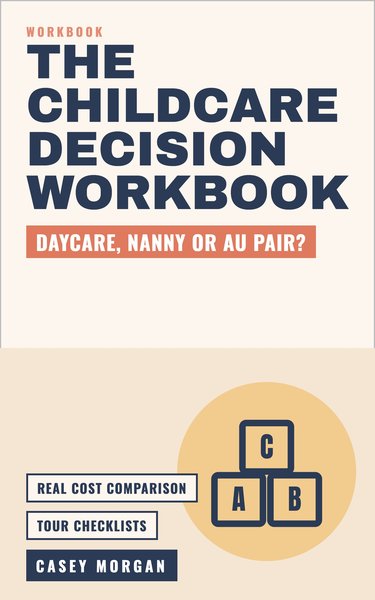
The companion book
The Childcare Decision Workbook
by Casey Morgan
Compare daycare, nanny, nanny share, au pair, and family care by cost and fit, with tour checklists, interview questions, tax worksheets, and a budget planner. A fill-in workbook, so it is printed paperback only.
Written by
ChildCarePath Team
Our team is dedicated to helping families find quality child care options through well-researched guides and resources.
Related Guides
Comotomo vs Dr. Brown's: Which Bottle for a Breastfed Baby at Daycare? (2026)
Comotomo's soft silicone body suits babies switching between breast and bottle; Dr. Brown's vent system targets gas and reflux. Compare cleaning, parts and daycare practicality.
Elvie Double Breast Pump Review: Who the Premium Wearable Actually Suits (2026)
An honest Elvie Double review for parents heading back to work: what the cordless in-bra design solves, where output and clogging complaints come from, and cheaper wearables that do most of the job.
Elvie Stride Plus Review: The Wearable That Kept the Motor Outside (2026)
An Elvie Stride Plus review for parents returning to work: suction to -300 mmHg, in-bra cups with an external motor, the tubing and condensation complaints, and cheaper and stronger alternatives.
Medela Pump in Style Pro+ Review: Four Parts and a Battery (2026)
A Medela Pump in Style Pro+ review covering the 11.8% more milk claim, wide-angle shields, 16 suction levels, four-part cleaning, and how it stacks up against the Spectra S1 Plus.
Momcozy S12 Pro Review: The Wearable Pump to Try First (2026)
A Momcozy S12 Pro review: double-sealed flange, three modes, nine levels, 6 oz capacity and around half the price of an Elvie or Willow. Where it wins and where the cheap wearable shows.
Spectra S1 Plus Review: Why It Is Still the Default Recommendation (2026)
A Spectra S1 Plus review covering the rechargeable battery, closed system, adjustable two-phase cycling, the flange sizing issue owners hit, and how it compares to the S2 Plus and Medela Pump in Style Pro+.